







Your daily AI news source
Your daily AI news source
From Job‑Loss Forecasts to Worker Support: California, New York and RAISE Launch AI Pilots as Cox and OpenAI Push GTM Redesign and Training
Share your love
A‑I Tech News Today — Briefing
Hosts: Aurora and Isabelle
Date of this briefing: 2026-07-01T21:48:13.000Z (UTC)
Salute.
This is a tight two- to three-minute update on the latest A‑I workplace and business moves — let’s jump in.
1) A‑I workforce policy: from job‑loss predictions to worker support
Key trend: Governments and nonprofits are shifting away from spooky forecasts and toward real data, measurement, and pilots.
- Who’s acting: California, New York, and the RAISE United States coalition.
- What they’re doing: building measurement and reporting systems and running workforce pilots so policymakers can see where disruption is happening.
- Why it matters: this enables more targeted retraining, clearer reporting on which industries face change, and pilot programs that test what actually helps workers adapt — instead of guessing which jobs will vanish next.
2) Cox Business: A‑I‑first growth requires go‑to‑market redesign
Quote: “A‑I is not an I‑T project you bolt on.” — Sarah Kim, VP of Commercial Marketing, Cox Business
- What becoming A‑I‑first means: redesigning how marketing, sales, and customer‑experience teams use customer data, coordinate workflows, train people, and set governance and human review points.
- Translation: Give people the tools, and redesign the work so A‑I actually delivers repeatable business value.
3) OpenAI Academy launches practical workplace courses
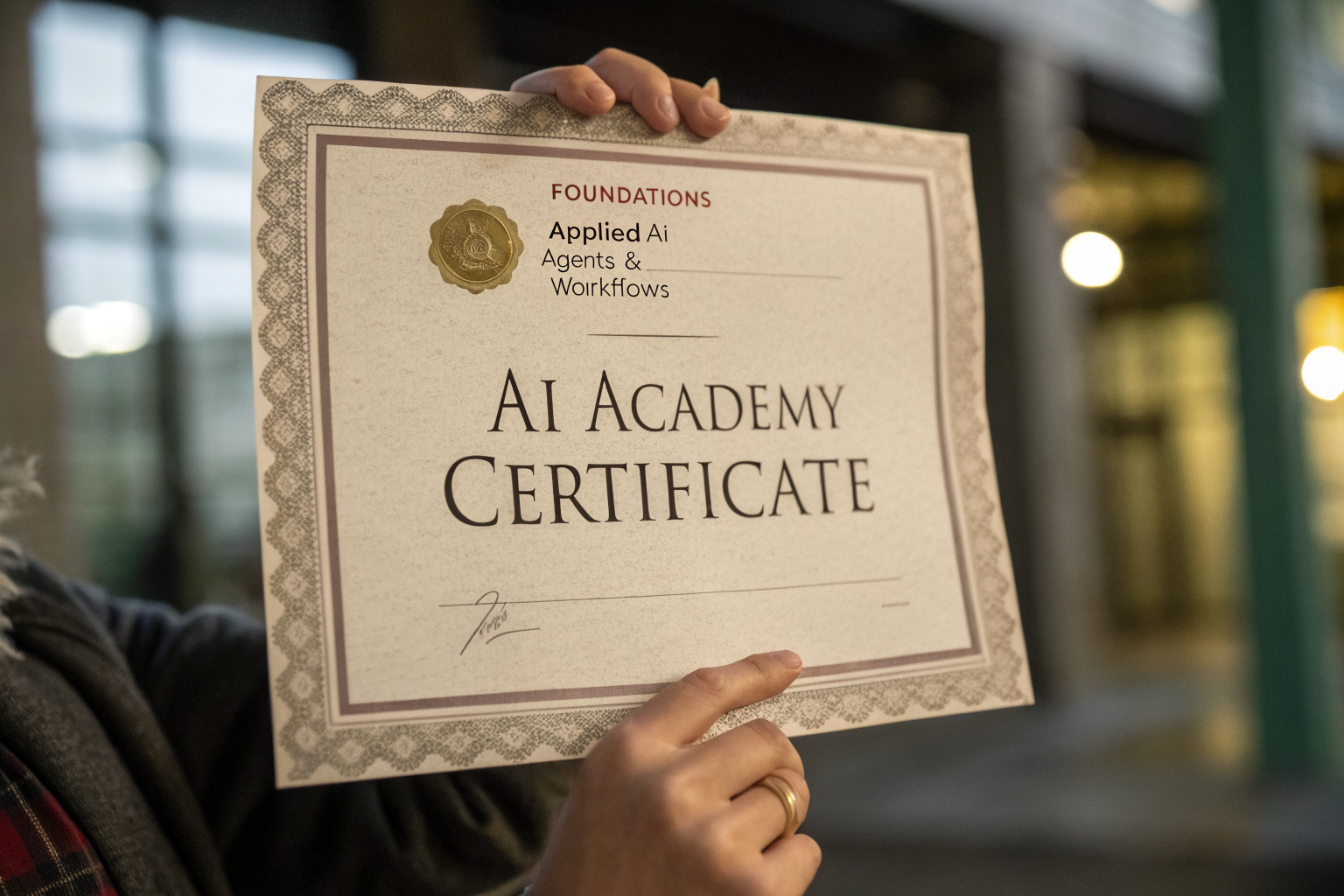
New courses: A‑I Foundations, Applied A‑I Foundations, and Agents and Workflows.
- Focus: hands‑on workplace skills — prompting, adding context, building repeatable workflows, and setting boundaries for agents.
- Benefits: learners can earn certificates; organizations can use courses for onboarding and employee training — a practical step toward wider, safer adoption.
4) Practical tip: use ChatGPT to map which parts of a job can be assisted
How to do it (quick steps):
- Copy a job description into ChatGPT.
- Ask it to break the role into individual tasks.
- Ask which tasks are good candidates for A‑I assistance, which should remain human‑led, and why.
- Review the suggestions with the actual job holders.
- Use the results to plan training, automation, or new workflows.
Pro tip: focus on tasks, not entire jobs — most roles are a mix of automatable and human‑centered work.
That’s our update. We’re Aurora and Isabelle — thanks for listening.
Stay curious, stay skeptical, and stay tuned to A‑I Tech News Today for more clear, usable dispatches on how A‑I is changing work and business.