





Your daily AI news source
Your daily AI news source
Anthropic Quietly Tops OpenAI in Business Adoption as Engineers Return to Codex — Playbooks Become Key to Maintaining Momentum
Share your love
AI Tech News Today
Hosts: Aurora (with co-host Isabelle)
Date: 2026-06-02T13:18:47.000Z
Quick hello: Hello — this is Aurora with Isabelle on AI Tech News Today.
Big Picture: Generative AI tools are duking it out
A fierce dance is playing out between major generative AI tools — and engineering teams feel the effects every time the lead flips.
Headline: Anthropic passes OpenAI in business adoption
- Ramp’s AI Index reports that Anthropic quietly overtook OpenAI for the first time, quadrupling business adoption in a single year.
- OpenAI grew only 0.3% in the same period.
- The headline favors Claude, but that trophy doesn’t tell the whole story.
Engineers are switching back to OpenAI
Why the migration back? Practical limits.
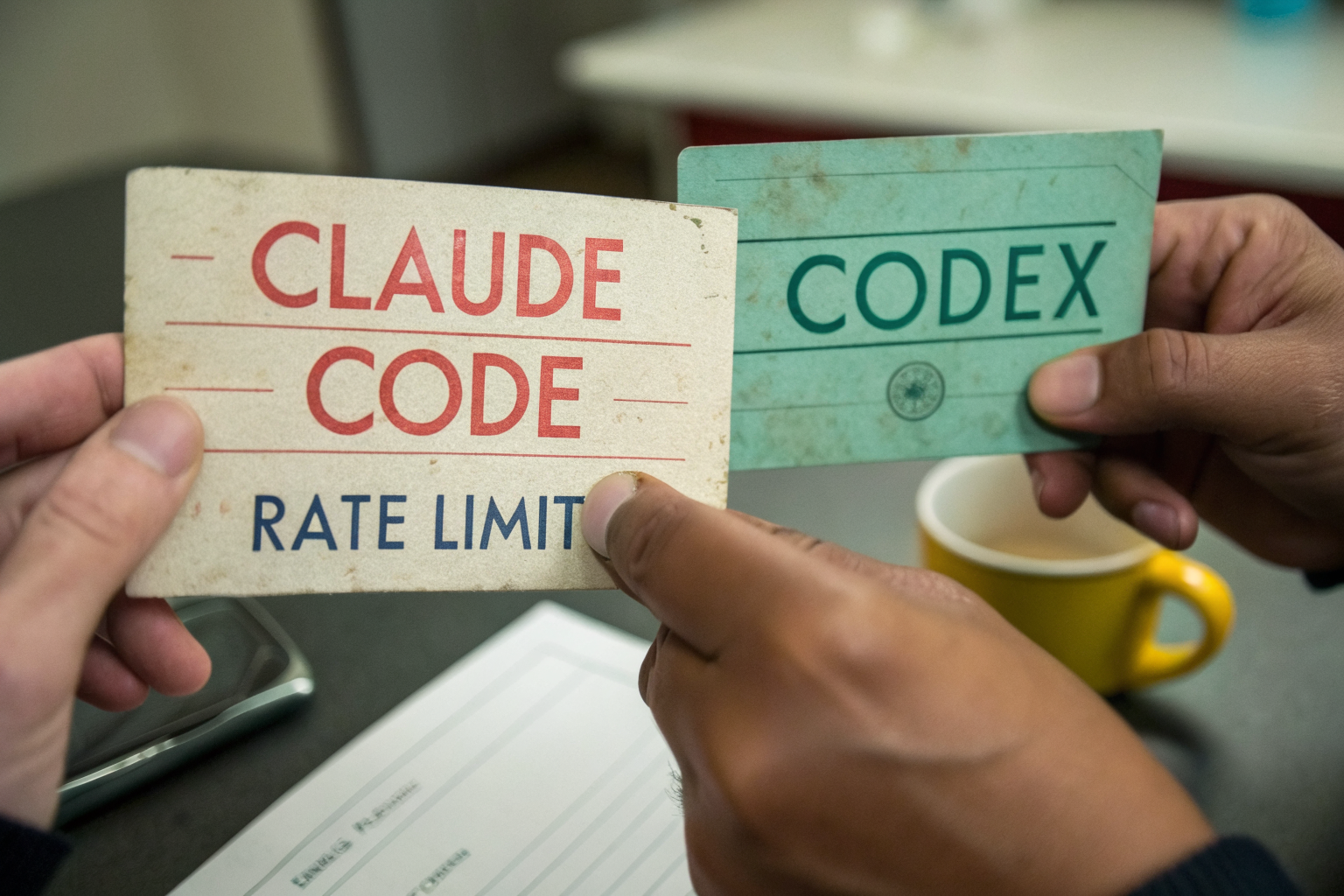
- Engineers originally drove the Claude surge, but many are returning to OpenAI because Claude Code hits rate limits too often.
- OpenAI’s Codex uses ~4× fewer tokens for the same tasks, so developers stay in flow instead of getting cut off.
- Survey of >500 software engineers:
- 65% now prefer Codex for daily work.
- Yet in blind code reviews, Claude’s output scored cleaner 67% of the time.
- Usage shifts:
- Codex usage jumped from 5% to 40% of Claude Code’s usage in four months.
- Codex crossed 5 million users.
- Commercial moves:
- OpenAI is offering free Codex to enterprise Claude Code customers who switch.
- Anthropic has temporarily raised Claude Code limits by 50% through July 13.
Expect a six‑month lead‑swapping cycle
This rivalry is familiar: one company pulls ahead → the other ships a response → users migrate → the lead flips again.
Give it another six months and we’ll probably be back where we started.
The bigger question: what every flip does to your team’s momentum.
Playbooks beat platform switches
The real cost of tool-hopping is lost momentum. Teams that keep winning do two things:
- Document processes outside the tool — maintain playbooks that describe inputs, steps, quality checks, and decision points.
- Treat the playbook as the source of truth and feed it into whatever tool you use next.
Quick checklist to minimize disruption:
- Pick one regular workflow.
- Ask the AI to write what the process actually does.
- Fix and refine that output.
- Save the result in a document you own.
- Run a switch test: see if someone else can reproduce the result on a different tool.
Closing — stay informed and stay practical
If your team uses Claude, Codex, or both, tell us which and whether you could switch tomorrow without losing weeks of work.
Stay tuned — Isabelle and I will keep you posted on the next twist in the AI tool wars.